Last updated September 2026
Ask for snapper on a Tuesday and get told there is gurnard and trevally instead, and it is easy to assume the shop has run out. Usually it has not. The cabinet is not a menu that got shorter, it is a record of what the boats could actually get to this week.
★View the Best Fish and Chips in Napier→Why the fish changes
Fish is one of the last genuinely weather-dependent things you can buy over a counter.
Boats do not go out in bad weather, and Hawke’s Bay gets its share of it. A few rough days means less landed, and what does get landed is whatever was where the boats could safely work rather than whatever anyone had ordered. Swell that looks unremarkable from Marine Parade can be enough to keep a small vessel tied up.
Different species also sit in different places, at different depths, at different times of year, and move for reasons of their own. So the shortage of the thing you wanted is rarely about demand. It is about where the fish were and whether anyone could get to them.
Which is why a counter with a changing selection is a good sign rather than a bad one. A cabinet that has the identical range every day of the year is telling you something about how far that fish has travelled.
How to tell it is fresh, by eye
You can judge this yourself in about ten seconds, and it is worth knowing.
The eyes. Clear, full and slightly domed. As fish ages the eyes go cloudy and sink inwards. This is the quickest single tell on a whole fish.
The gills. Lift the flap. You want a clean red or deep pink. Brown, grey or slimy means time has passed.
The flesh. Press it gently. It should spring back. If your fingerprint stays, it is old.
The smell. Fresh fish smells of the sea, clean and faintly briny. It should not smell fishy. That strong fishy smell people associate with seafood is the smell of fish that is past it.
The whole animal. Skin bright rather than dull, scales on rather than sloughing off, and it should look wet rather than dried out at the edges.
Whole fish or fillets
Whole fish keeps better, because the skin and frame protect the flesh, and it is generally better value per kilo since you are not paying for the filleting. You also get the frame and head, which make stock worth more than most people realise.
The trade-off is obvious: you have to deal with it, or ask someone to. Most places that sell whole fish will fillet it for you.
If you are buying fillets, look at the cut edges. They should be neat and glossy, not dried or gaping between the flakes. Gaping is a sign the fish has been handled roughly or has sat too long.
What to actually ask at the counter
The single most useful question is not “is this fresh”. Everyone says yes. Ask instead:
What came in today, and what would you take home? People who handle fish daily know exactly which of it they would eat tonight, and they will usually tell you.
What is this like to cook? Firm and forgiving, or delicate and easy to overcook, changes what you should do with it more than the species name does.
Can you fillet it, and can I have the frame? Both are normally a yes and neither usually costs anything.
Then be flexible. Going in wanting one species and refusing everything else is how you end up with the least fresh thing in the cabinet. Going in wanting fish for four and asking what is good is how you get the best of it.
Getting it home in a Napier summer
Short trip, cold the whole way. That is the entire rule and it matters more here in February than it does in July.
Fish deteriorates fast in a warm car. Make it the last stop rather than the first, take a chilly bag if you are combining it with other errands, and get it into the fridge on the coldest shelf when you are home. Cook it the same day if you can, the next day at the outside.
If you are freezing it, do it the day you buy it rather than after it has sat in the fridge for two days. Freezing does not undo the time already passed.
A note on cooking what you were given
Getting handed something unfamiliar is the normal outcome of shopping this way, and it is not a problem.
Firmer white fish handles a hot pan, a grill and a batter. More delicate fish wants gentler treatment and a shorter time. Oilier species suit the barbecue and strong flavours. If you do not know which category you have been handed, the person who sold it to you does.
The fish that is best today is the fish that came in today, not the one you had in mind on the way there.
Where The Fisherman’s Shop fits
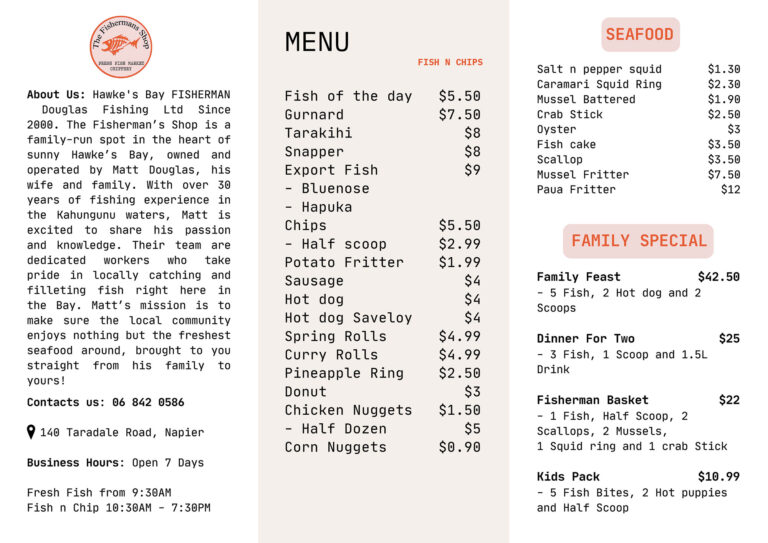
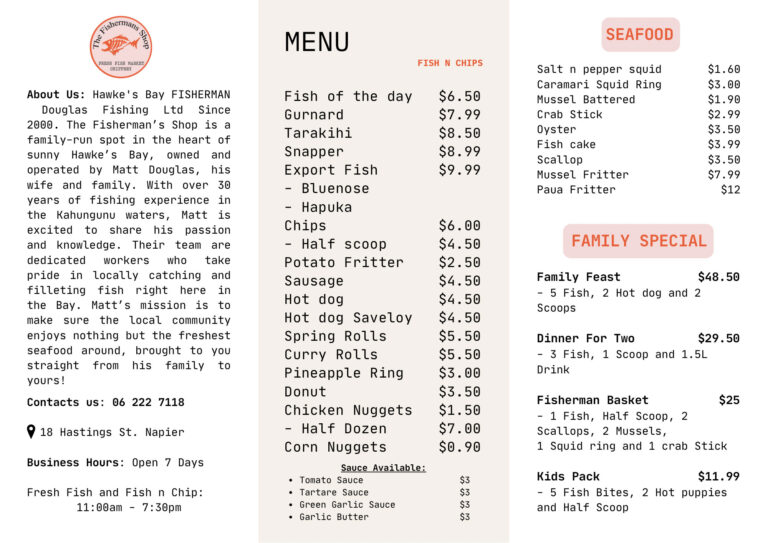
The Fisherman’s Shop runs two sites in Napier, one at 18 Hastings Street in the city and one at 140 Taradale Road in Onekawa, open seven days.
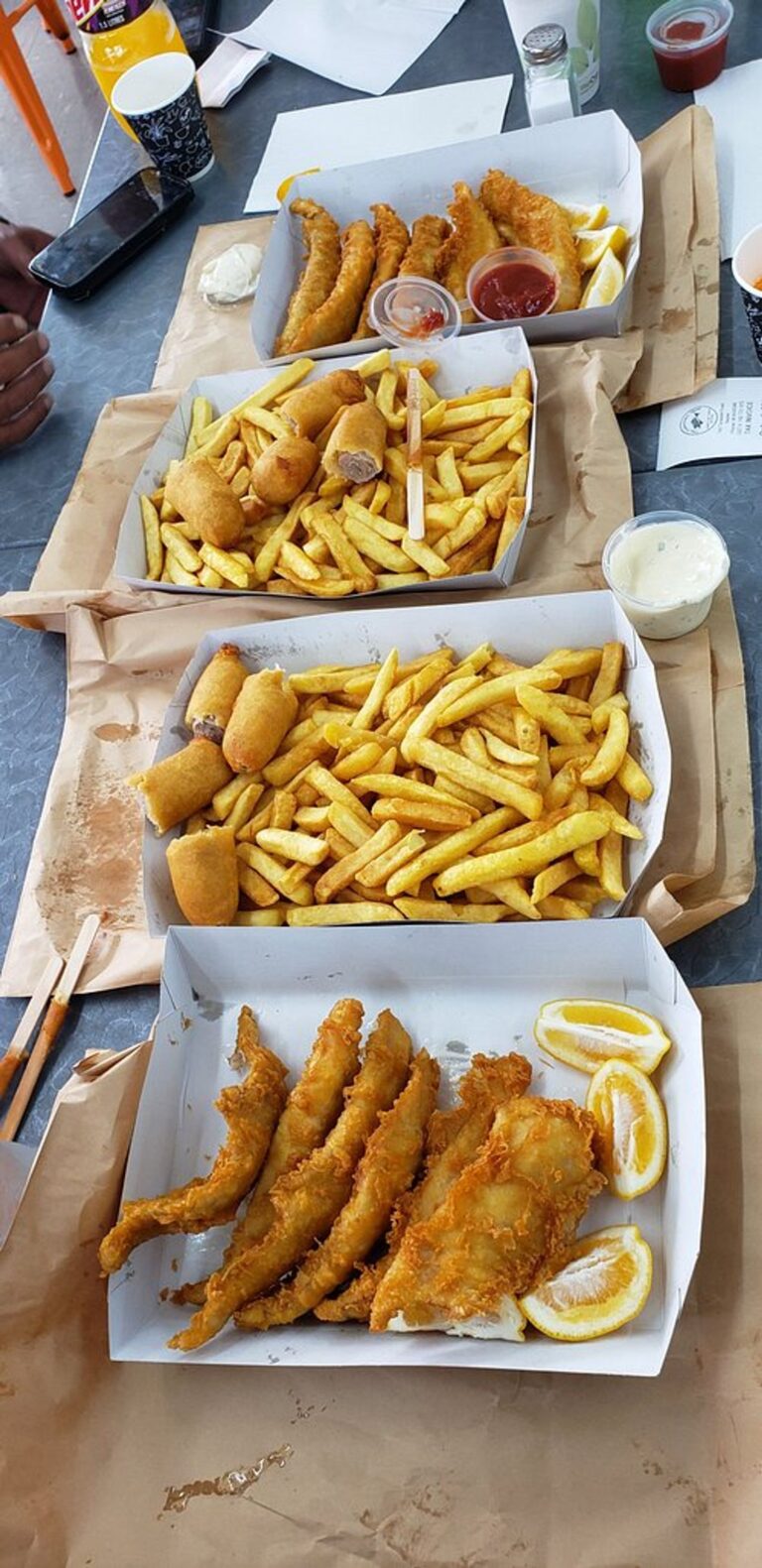
The Taradale Road site is the relevant one for everything above: it is a fresh fish market as well as a chippery, with whole fresh fish in an iced cabinet you can pick from. As their own site puts it, what is in that cabinet on any given day depends on the weather and the catch, which is the honest version and the reason this article exists. They also do family feast packs, dinner-for-two options and kids packs if the answer tonight is that nobody is cooking.
Wherever you buy it, check the eyes and the gills, and ask what came in today. It is the only question that gets you a real answer.